


In boardrooms, decisions shape not just financial outcomes but the future direction, people’s well-being, and (often quietly) the values of an organization. The challenge is that executive decision-making never happens in a vacuum. We bring our assumptions, our blind spots, and the cultures we operate in to the table every time we make a big call.
We have often noticed that the difference between a brilliant, sustainable outcome and a poorly judged one can be traced back to the ability—or inability—to identify and address bias. Bias does not always show itself loudly. Sometimes it lurks in the shape of traditions, power dynamics, pressures, and even good intentions left unchecked. The following sections open up what bias means in these contexts, how to spot it, and what to do about it.
What is bias in executive decisions?
Bias in executive decision-making is a pattern where judgments and choices are swayed by hidden thoughts or emotions, rather than complete facts or logical analysis. These influences might stem from past experience, deep-rooted habits, peer pressure, social identity, or even the culture of an organization. Everyone is susceptible. The more responsibility we carry, the wider the impact becomes.
Bias does not discriminate by title—it affects everyone, including those at the top.
The core issue with bias is that it can shape not just individual choices but also the collective direction. When it goes unchallenged, bias can undermine trust, hurt morale, limit innovation, or even cause reputational and financial harm.
How does bias creep in?
Through years of working with executive teams, we have seen bias appear in many forms. Sometimes it’s a comforting shortcut. Other times, it is part of the unspoken rules of how things get done. Here are common pathways for bias to slip in:
- Confirmation bias: Seeking or favoring information that supports our existing view or strategy, while ignoring contrary evidence.
- Authority bias: Overvaluing the opinion or decision of someone senior, even when evidence is lacking.
- Groupthink: Staying silent or agreeing with the dominant view to maintain harmony, rather than speaking up with a different or critical perspective.
- Anchoring: Giving too much weight to the first piece of information received, or initial proposals, even when better data is available.
- Status quo bias: Choosing options that maintain the current state, simply because change feels risky or uncomfortable.
Recognizing these patterns early makes it much more likely that decisions are grounded in reality, rather than hidden impulses.
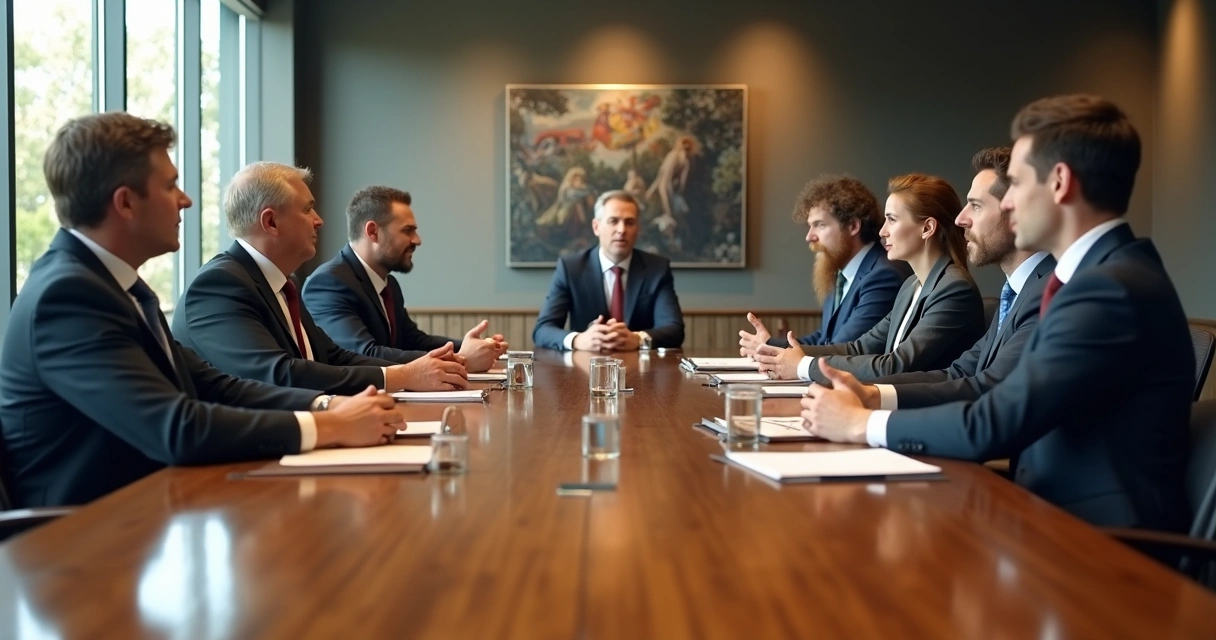
The signs of bias in the boardroom
How can we spot bias in real time? In our work, we look for specific behaviors and outcomes that suggest something more than logic is at play.
- Disregard for alternative perspectives: If a team member challenges the status quo and their idea is dismissed quickly without deep consideration, bias may be a factor.
- Lack of diversity in opinions: When everyone in the room nods along, especially in high-stakes scenarios, it could be a sign that groupthink or comfort with similarity is present.
- Overconfidence in predictions: Statements that suggest certainty in complex, unpredictable environments could indicate a blind spot or anchoring.
- Repeated patterns in outcomes: Recurring types of decisions, especially if they often lead to similar mistakes or overlook the same issues, may suggest a deeper bias in organizational thought.
- Minimizing or rationalizing mistakes: If obvious setbacks are brushed aside or explained away too easily, executives may be protecting their egos rather than confronting bias.
We’ve seen how a single persistent bias can cascade into decisions that seem reasonable in the moment, but later reveal underlying issues. One powerful way to highlight bias is to deliberately seek out challenging viewpoints and create a culture where dissent is encouraged—and rewarded.
Why does bias thrive at the executive level?
It’s fair to ask why bias seems especially persistent in executive circles. With more experience, training, and responsibility, shouldn’t leaders be less prone to these errors?
Our experience is that the complexities of leadership often have the opposite effect. The speed and stakes of executive choices, pressure from stakeholders, and lack of open feedback all combine to make bias much more likely. Power and status can insulate leaders from honest criticism. The higher you go, the less likely people are to tell you you’re wrong.
In environments where speaking up is risky, bias gains silent ground.
How can we identify our own blind spots?
Awareness is the starting point. Spotting bias requires self-observation and willingness to pause. It can feel uncomfortable to acknowledge our limitations, especially when others are looking to us for clarity and certainty.
- Reflect before important decisions: Pause to ask if we are considering all available data, or just the information that feels comfortable or familiar.
- Invite critical questions: Create deliberate openings in meetings for alternative views, even if just as an exercise.
- Check assumptions: Before finalizing a key decision, list out the beliefs or facts we are leaning on. Ask if these have been tested or just accepted.
- Rotate perspectives: Sometimes imagining ourselves in a different stakeholder’s shoes can reveal invisible biases.
- Review decision patterns: Examine past decisions for repeating themes or blind spots. Are the same types of errors or surprises showing up again and again?

Block time for these practices. It may feel counterintuitive to slow down in fast-decision environments, but reflection sharpens clarity and can save far more time and effort than reacting on autopilot.
How can organizations reduce bias in executive decisions?
Organizational bias cannot be fixed by one person—it is a shared responsibility. Over time, we have found useful practices that chip away at unwanted bias and support better judgment:
- Promote psychological safety: People must feel safe to voice disagreements without risk of ridicule or punishment. That requires consistent encouragement and visible support from the top.
- Design diverse teams: Bring together individuals with different backgrounds, thinking styles, and experience levels. Diversity in team composition reduces groupthink and offers new angles on familiar problems.
- Set structured decision steps: Use clear processes, such as checklists or formal devil’s advocate roles, to pause at key inflection points and ask, “What are we missing?”
- Use external data sources: Look for trends or analysis from outside the immediate organization or industry to challenge internal beliefs.
- Conduct regular reviews: After big decisions, schedule “what went right, what did we miss” sessions. Celebrate insight gained from identifying bias after the fact.
“Challenge the decision, not the person.”
This motto steers conversations back to facts and thoughtful discussion, instead of personal defense or ego. The climate and values of an organization are revealed in these moments.
Conclusion
Bias is part of being human, and it accompanies us into every meeting and decision. The best executive teams are not those that eliminate all bias, but those committed to spotting it and minimizing its impact. We believe that a conscious, honest, reflective decision environment is not just more accurate—it is also more ethical, resilient, and worthy of trust. With attention and practice, we can turn bias into a chance for learning and stronger leadership rather than a silent force steering us off course.
Frequently asked questions
What is bias in executive decisions?
Bias in executive decisions is when hidden preferences, emotions, or habits influence leaders’ choices instead of objective evidence or rational analysis. These influences can show up in what is paid attention to, how risks are judged, and even which voices are heard.
How to spot bias in leadership choices?
Look for situations where alternative perspectives are dismissed, when everyone agrees unusually fast, or if decisions rely on the same untested assumptions. Sometimes, overconfidence or a lack of genuine debate signals that bias may be present.
Why does bias affect executive decisions?
Bias shapes executive decisions because leaders are constantly exposed to pressure, incomplete information, and organizational cultures that may reward certain ways of thinking over others. This can make it hard to see blind spots, especially without regular checks or open discussion.
What are common types of decision bias?
Some common types are confirmation bias (seeking evidence that fits what we already believe), groupthink (avoiding conflict in favor of harmony), anchoring (focusing too much on first impressions), and status quo bias (preferring what exists). Each type interferes with clear, adaptive decision-making.
How can I reduce bias in decisions?
You can reduce bias by encouraging diverse viewpoints, creating a culture where debating ideas is safe, slowing down for reflection, and setting up structures that challenge assumptions before choices are finalized. Regularly reviewing past decisions with honesty also helps make progress.